
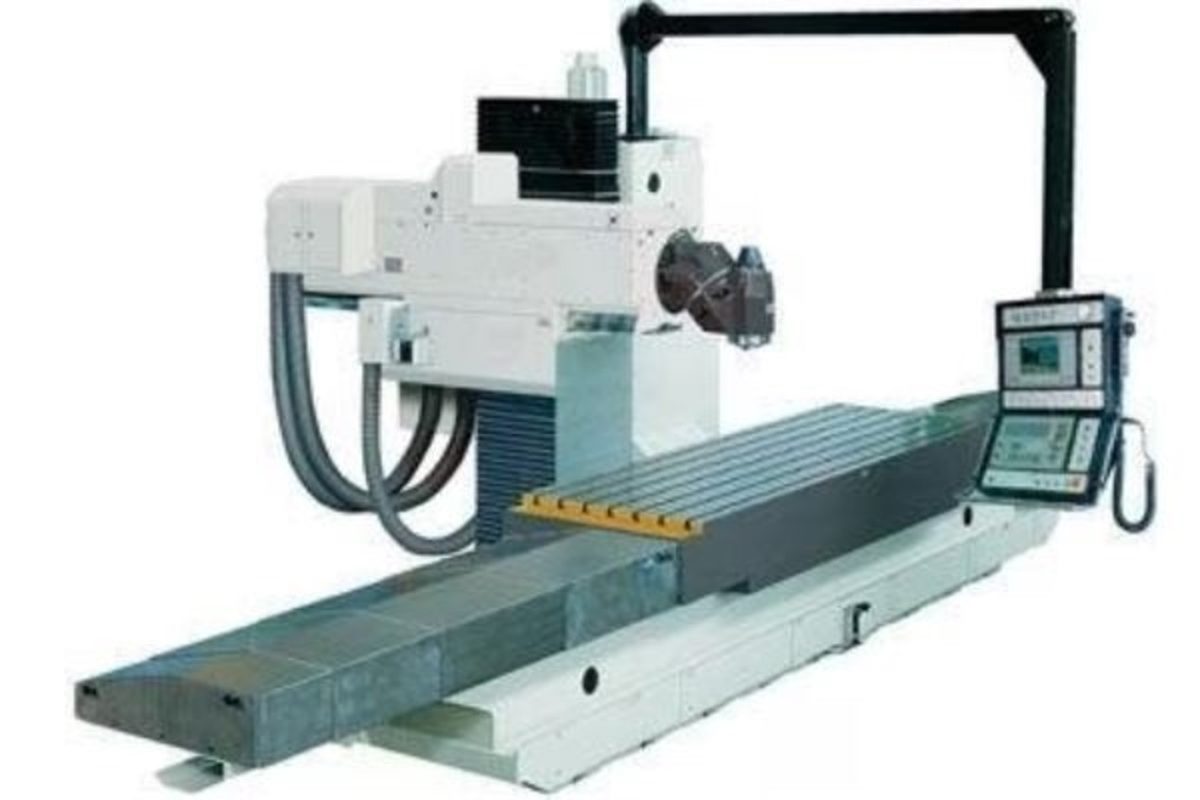
There is something deeply satisfying about watching a milling machine work. The spindle turns. The table moves. And what was once a rough block of metal slowly becomes something precise, something that actually fits. If you have spent any time around metalworking, you know that feeling.
But not all milling machines are built equal. And if heavy, complex workpieces are part of your daily routine, there is one type that quietly changes everything: the bed type milling machines.
Most people start with a knee type milling machine. Versatile, decent for general work. But the moment your parts get bigger or your tolerances get tighter, the knee type starts to show its limits fast.
A bed type machine is built on a completely different idea. The worktable sits directly on a fixed, rigid bed. No knee. No vertical table adjustment. The spindle head moves instead. That one design decision changes everything about how the machine behaves under load. The rigidity is the first thing you notice. Vibration drops. Cuts get cleaner. Tools last longer. Surface finish improves without extra effort.
The Industries That Cannot Work Without Them
Walk into any shop handling large castings, mould bases, machine frames, or structural components and you will almost certainly find one of these running somewhere. Aerospace, automotive, die and mould, heavy equipment manufacturing — these industries do not have the luxury of inconsistent results.
When dimensional accuracy matters and workpieces are heavy, a bed type milling machine is not an upgrade. It is the foundation.
Why Brand Reputation Still Matters
Some manufacturers built their name through genuine engineering quality, and that reputation holds up decades later. When you look at the used market, you can still find older European machines that perform beautifully because they were simply built to last.
Among the most respected names in precision milling, DMG machines have long stood for advanced CNC capability and real shop floor reliability. Workshops that have run them know exactly what they bring to demanding production. A well maintained machine from a name like that does not lose its value overnight, and it does not let you down in the middle of a job.
What to Look for When Choosing One
Think about the size of workpieces you handle most. Table dimensions matter enormously. Too small and you fight it constantly. Too large and running costs climb for no reason.
Check the spindle taper, speed range, and the condition of the guideways. On any used machine, the guideways tell the whole story. Worn guideways mean poor accuracy and expensive repairs. Also look at the CNC control system. Older controls can be hard to find support for, so make sure parts and service are still accessible before you commit.
The Used Market Is Smarter Than Most People Think
There is a strange stigma around used machinery. People assume used means worn out. In the world of heavy machine tools that assumption is usually wrong.
A bed type milling machine built twenty years ago by a quality manufacturer, properly serviced, can outperform a cheap new machine with ease. The castings are heavier. The engineering is more conservative and therefore more durable. And the price difference can be very significant. The key is knowing what you are looking at and finding machines with a verified history.
A good bed type milling machine does not shout. It does not demand attention. It just works, day after day, producing parts that meet spec without drama.
If your shop is growing and you are taking on bigger, more demanding work, this is the type of equipment worth looking at seriously. The shops that invest wisely in the right machines at the right time are the ones that grow. And sometimes that investment is a machine that has already proven itself somewhere else and is ready to prove itself again in your workshop.



Leave a Reply